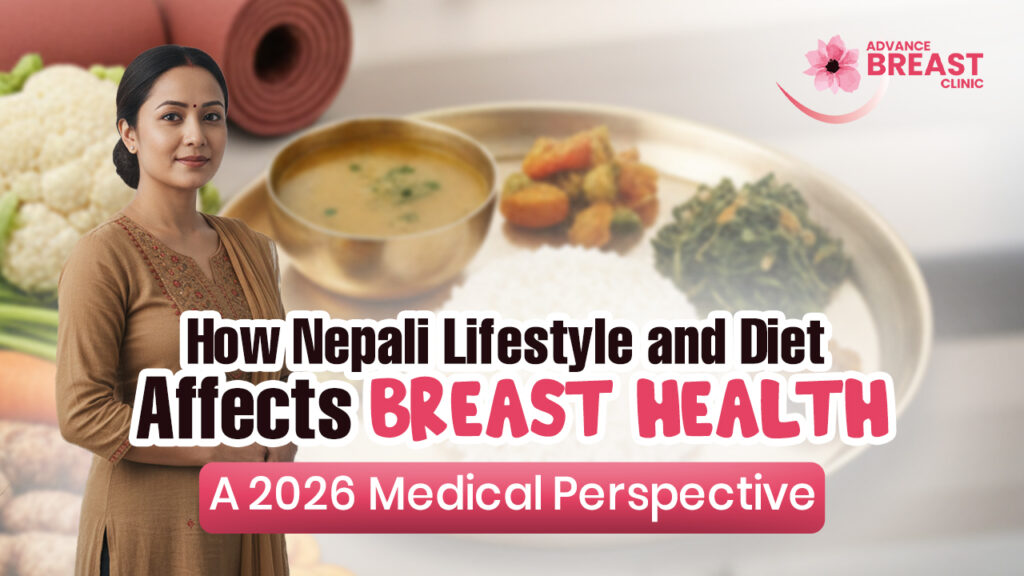
How Nepali Lifestyle and Diet Affects Breast Health: A 2026 Medical Perspective
Understanding breast health is no longer just about awareness; it is about analyzing how the specific nuances of a “Nepali lifestyle” and our evolving diet influence risk factors. From the high-altitude traditional diets of the Himalayas to the fast-paced, urbanized environment of the Kathmandu Valley, every choice matters.
In the last decade, Nepal has undergone a significant epidemiological transition. While infectious diseases were once the primary concern, non-communicable diseases (NCDs) specifically cancer now account for over two-thirds of deaths in the country. Among these, breast cancer has emerged as the most prevalent cancer among Nepali women, accounting for approximately 16.9% of all female cancer cases according to 2025/2026 clinical reports.

The Dietary Shift: Traditional Wisdom vs. Modern Risks
The traditional Nepali diet is inherently rich in many nutrients that support breast health. However, the “nutrition transition” the shift toward processed, high-sugar, and high-fat foods is creating new challenges.
The Protective Power of the Traditional Plate
Standard Nepali meals often contain ingredients that are currently being studied for their protective properties:
-
Turmeric (Besar): Curcumin, the active compound in turmeric, has well-documented anti-inflammatory and antioxidant properties.
-
Fermented Foods (Gundruk/Sinki): Emerging research in 2026 suggests that a healthy gut microbiome, supported by fermented traditional foods, may play a role in regulating estrogen metabolism.
-
Legumes and Lentils (Dal): High fiber intake is consistently linked to lower breast cancer risk as it helps the body eliminate excess estrogen.
The Rise of “Westernized” Eating Habits
As more families move to urban centers, the consumption of ultra-processed foods, refined flours (Maida), and sugary beverages has surged.
-
Obesity and BMI: Clinical data from 2025 indicates that overnutrition and obesity are significant risk factors in Nepal. Fat tissue produces estrogen, and high levels of this hormone are a known driver of certain breast cancers.
-
The Glycemic Load: High-sugar diets lead to insulin spikes, which can stimulate cell growth and potentially contribute to tumor progression.
| Food Category | Traditional/Beneficial Choice | Modern/High-Risk Choice |
| Grains | Buckwheat (Phapar), Millet (Kodo), Brown Rice | White Flour (Maida), White Bread |
| Vegetables | Green Leafy Vegetables (Saag), Cauliflower | Deep-fried snacks, Salt-preserved pickles |
| Protein | Lentils (Dal), Soybeans (Bhatmas), Fish | Red Meat, Processed Sausages |
Lifestyle Factors in Urban Nepal
Living in a major city like Kathmandu or Lalitpur introduces environmental and lifestyle variables that were less common a generation ago.
Physical Inactivity and Sedentary Work
With the shift from agricultural labor to office-based work, physical activity levels have dropped. Regular exercise helps regulate hormone levels and maintains a healthy immune system. For many women in Kathmandu, finding safe, gender-responsive public spaces for exercise remains a challenge, yet even 30 minutes of brisk walking daily can significantly improve your breast health profile.
Environmental Stressors: Pollution and Xenoestrogens
Air pollution in the Kathmandu Valley is not just a respiratory issue. Fine particulate matter (PM2.5) can act as an endocrine disruptor. Additionally, the increased use of plastics and certain pesticides in urban food chains introduces “xenoestrogens”—chemicals that mimic estrogen in the body and can interfere with normal breast tissue development.
The Delay in Childbearing
Social shifts in Nepal have led many women to pursue higher education and careers, delaying their first pregnancy until after age 30. While this is a positive sign of social progress, medical data shows that late first-time pregnancy and reduced breastfeeding duration can slightly increase the lifetime risk of breast cancer.
The Importance of Specialized Care: Advance Breast Clinic

When lifestyle and diet are managed, the next pillar of health is early detection. In Nepal, many women delay seeking help due to “Socio-cultural beliefs” or a lack of specialized facilities.
As a Breast Cancer Specialist, Dr. Banira Karki noticed that many patients were visiting general surgeons when they actually needed specialized oncosurgical expertise. This led to the establishment of Advance Breast Clinic, the first dedicated center of its kind in the country.
Why Choose a Specialized Breast Clinic in Nepal?
A general hospital often lacks the focused environment needed for sensitive breast issues. At a dedicated Breast Clinic in Kathmandu, patients receive:
-
One-Stop Diagnosis: From clinical exams to coordinating ultrasound and mammography interpretation.
-
Triple Assessment: A gold-standard protocol involving physical examination, imaging, and biopsy (if needed) to ensure 99% diagnostic accuracy.
-
Oncoplastic Expertise: Dr. Banira Karki specializes in breast-conserving surgery, ensuring that the cancer is removed while preserving the breast’s natural appearance a vital factor for a patient’s psychological recovery.
Early Detection: Your Five-Step Checklist
Regardless of your diet or lifestyle, early detection remains the most effective “cure.” Dr. Banira Karki recommends the following for every Nepali woman:
-
Monthly Self-Examination: Perform this 3–5 days after your period ends. Look for lumps, skin dimpling, or nipple discharge.
-
Annual Clinical Exam: Visit a Breast Clinic in Kathmandu once a year for a professional check-up after age 30.
-
Screening Mammography: Generally recommended every 1–2 years for women over age 40, or earlier if there is a strong family history.
-
Know Your Normal: Every woman’s breast tissue is different. Being “breast aware” means knowing how yours feel so you can spot changes immediately.
-
Seek Specialist Advice: Don’t ignore “painless” lumps. Most breast cancers are not painful in the early stages.
Breast Health Statistics in Nepal (2026)
To build a truly healthy society, we must look at the data. Recent retrospective studies in Nepal show that while the incidence is increasing, the survival rates are also improving due to better access to centers like Advance Breast Clinic.
-
Median Age of Diagnosis: In Nepal, breast cancer often appears in women in their late 40s and early 50s, which is slightly younger than in Western populations.
-
Early vs. Late Detection: Approximately 60% of cases in Nepal are still diagnosed at Stage III or IV. Increasing visits to a Breast Clinic in Nepal for screening could flip this statistic, allowing for 90%+ survival rates.
Frequently Asked Questions (FAQ)
1. Can drinking green tea improve breast health?
Green tea is rich in polyphenols (EGCG) which have anti-cancer properties. While it is not a “magic bullet,” replacing sugary milk teas with green tea is a positive lifestyle change frequently recommended at our Breast Clinic in Kathmandu.
2. Is breast pain always a sign of cancer?
No. In fact, most breast pain (mastalgia) is related to hormonal cycles, diet (excess caffeine), or stress. However, any persistent or localized pain should be evaluated by a Breast Cancer Specialist like Dr. Banira Karki to rule out underlying issues.
3. Does a family history of cancer mean I will get it too?
Only about 5–10% of breast cancers are hereditary (linked to BRCA1 or BRCA2 genes). Most cases are “sporadic,” meaning they result from a combination of aging, environment, and lifestyle. If you have a family history, a consultation at a Breast Clinic in Nepal for risk mapping is highly advised.
4. Does wearing a bra cause breast cancer?
This is a common myth in Nepal. There is no scientific evidence linking bra use, including underwired bras, to the development of breast cancer.
5. Where is the best place for a breast check-up in Kathmandu?
For specialized, female-led care, Advance Breast Clinic in Jawalakhel, Lalitpur, is the pioneering center. It offers a comfortable, private environment dedicated solely to breast conditions.
Conclusion: Reclaiming Your Health Journey
The “Nepali lifestyle” is in a state of flux. While we face new risks from urbanization and dietary changes, we also have more tools than ever to protect ourselves. By returning to a diet rich in whole foods, staying physically active in our beautiful hills or urban parks, and prioritizing early screening, we can change the narrative of breast cancer in Nepal.
Your journey to better breast health begins with awareness but is sustained by action. Whether it is your first self-exam or a scheduled mammogram, every step counts. Trust your care to the experts who understand the unique needs of Nepali women.