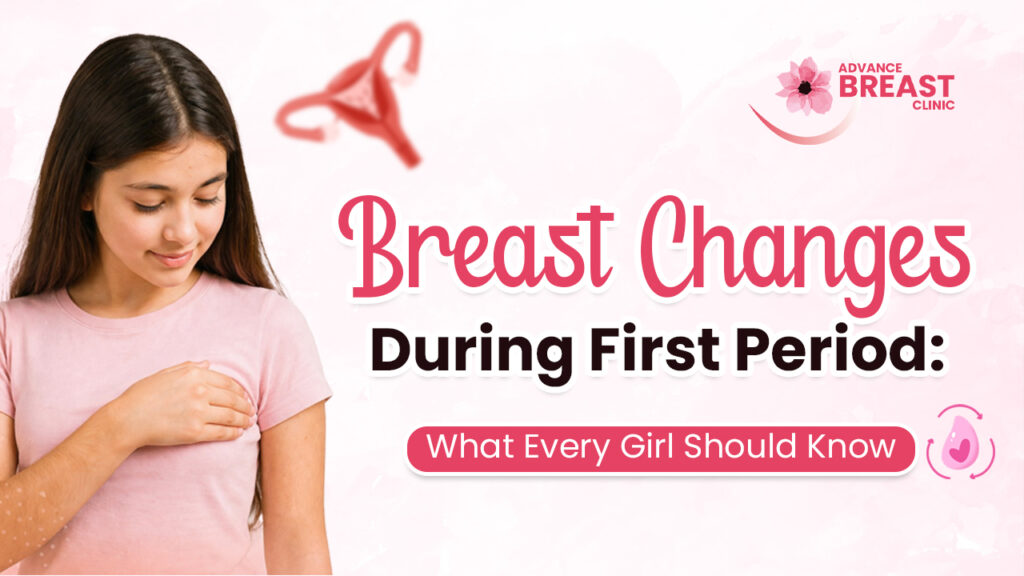
Breast Changes During First Period: What Every Girl Should Know
Breast Changes During First Period can feel surprisingly scary especially if nobody explains what “normal” looks like. The good news: most changes around the first period happen because of natural hormonal shifts during puberty and the menstrual cycle. In Nepal, many girls start their periods around early teen years, and experiences vary widely. A UNICEF study in Nepal reported an average menarche age of 12–13 years in the districts studied (with a reported range from 10 to 17).
In an educational message shared by Dr. Banira Karki, common early changes are explained clearly:
- Breast bud (often the first noticeable change)
- Hormonal changes that begin breast development
- Sensitivity/tenderness in the breast area
This blog explains those changes in simple, supportive language plus when to relax, when to track symptoms, and when it’s smart to visit a breast clinic in Kathmandu for reassurance.
Quick reassurance: Most breast changes at puberty and around periods are normal and temporary. Pain or lumpiness is usually benign especially in teens.
What “Breast Changes During First Period” really means
The first period (menarche) does not start breast development; breast growth often begins before the first period. Many girls get their first period about 2–3 years after breast budding begins.
So when you notice breast changes “during the first period,” it’s often because:
- puberty breast development is already in progress, and/or
- Your cycle hormones temporarily change breast tissue (swelling, tenderness, lumpiness).
Why breasts change: hormones in simple terms
Your body uses hormones like estrogen and progesterone to guide puberty and the menstrual cycle. These hormones can:
- stimulate breast tissue growth over time (puberty)
- cause temporary water/fluid changes in the breast before and during periods (monthly cycle)
A simple “cycle map” of breast feelings
This is a general pattern not everyone feels it:
| Time in cycle | Common breast feeling | Why it happens (simple) |
| 1–2 weeks before period | Tenderness, heaviness, mild swelling | Hormone changes can increase sensitivity |
| During period | Pain may peak then start easing | Hormones shift again |
| After period | Breasts often feel lighter/less sore | Tissue swelling reduces |
The NHS notes period-related breast pain often starts up to 2 weeks before a period, worsens, and then improves when the period ends.
Breast buds and puberty timing: what happens first?
What is a “breast bud”?
A breast bud is a small, firm lump under the nipple area that signals the start of breast development (often the first visible sign of puberty). Pediatric/adolescent gynecology resources describe thelarche (breast budding) as a typical early puberty milestone, commonly starting around 8–12 years (with normal variation).
When does the first period usually happen?
UNICEF guidance notes that many girls get their first period between 9 and 15 years, with an average around 12 (varies by country, nutrition, genetics, and other factors).
ACOG also notes menstruation typically begins about 2–3 years after breasts start developing.
Nepal context (real data)
A UNICEF report from Nepal (study districts) found the average age for the onset of menarche was 13 years in Bajura and Achham, and 12 years in Parsa (range reported: 10–17).
Normal breast changes around the first period
Here are common, normal changes girls may notice as their first period approaches or starts.
1) Tenderness or soreness (sensitivity)
Breast tenderness is often linked to menstrual-cycle hormones. It may feel like:
- dull aching
- heaviness
- soreness when touched
- sensitivity near the nipples or outer breast
2) Swelling or “fullness”
Some girls notice their breasts look slightly bigger or feel fuller before a period. This is often temporary.
3) Uneven growth (one breast grows faster)
It is extremely common for one breast to develop earlier or faster during puberty. Most people become more symmetrical over time, but natural asymmetry is also normal.
4) “Lumpy” feeling before periods
Some people feel lumpiness that comes and goes with the cycle. It can be related to normal tissue changes. Tracking patterns helps if it disappears after the period, that’s reassuring. Some NHS pathways suggest a simple breast pain diary for a couple cycles when patterns are unclear.
5) Nipple/areola changes
During puberty, the areola (the darker area around the nipple) may:
- darken slightly
- widen
- become more sensitive
These are typical puberty changes.
Breast tenderness: how common is it? (stats)
If you feel breast pain and worry “Is something wrong with me?” you’re not alone.
- A medical reference (NCBI/StatPearls) notes mastalgia (breast pain) affects up to 70% of women at some point in life and is commonly related to the menstrual cycle.
- A classic clinic-based study reported 79% of participants experienced cyclical breast symptoms.
- The NHS emphasizes that breast pain is usually linked to periods and is commonly not due to something serious.
Important: These stats include adults too, but they help show how normal hormone-related breast discomfort is.
Lumps in teens: what they usually are (stats)
Finding a lump can be scary. In teens, most breast lumps are benign (non-cancerous).
The most common teen breast lump: fibroadenoma
- A review article reports fibroadenomas account for a large share of adolescent breast masses and cites an overall incidence around 2.2% in adolescents.
- An AAFP clinical article notes that in adolescents, only 0.02% of surgically removed breast masses are malignant, while fibroadenomas account for up to 95% of breast masses in this age group.
That doesn’t mean you should ignore a lump, it means that evaluation is often reassuring, and early assessment is wise.
Normal vs concerning: a practical table
Use this table to decide what to monitor at home versus what needs a check-up.
| Likely normal (common in puberty/first periods) | Needs medical evaluation (don’t delay) |
| Mild to moderate tenderness that comes before period and improves after | New hard lump that persists and grows over weeks |
| Breast bud under nipple area during early puberty | Skin dimpling, thickening, or “orange peel” texture |
| Temporary lumpiness that changes with cycle | Bloody nipple discharge (especially spontaneous) |
| Slight swelling/fullness before periods | Redness + fever + hot painful area (possible infection) |
| One breast developing faster than the other | Nipple pulled inward suddenly or new nipple changes |
| Soreness linked to periods | Pain in one spot that doesn’t follow cycle and persists |
Guidelines and reputable health sources emphasize that cyclical breast pain is often benign, and reassurance plus symptom tracking can help while red flags should be assessed.
Comfort tips for breast soreness (safe & simple)
These are practical, low-risk steps many people find helpful during period-related breast tenderness:
- Wear a supportive bra (especially during sports)
- Warm compress for aching, or a cool compress if swelling feels uncomfortable
- Gentle movement (walk/stretch) if cramps and PMS symptoms are present
- Track symptoms for 2 cycles (note timing, severity, and triggers)
- Avoid pressing or repeatedly checking the same sore area this can increase tenderness and anxiety
If pain is significant, a clinician can advise safe options based on age and health history.
When to see a breast specialist in Kathmandu
You don’t need to “wait until it’s terrible” to ask questions especially for first-period changes that create anxiety. Consider visiting a breast specialist in Kathmandu if:
- breast pain is severe and affects school/sleep
- a lump persists after the period ends or is enlarging
- there are skin changes, discharge, or signs of infection
- you’re unsure whether what you’re feeling is a breast bud, a lump, or normal tissue
What an appointment usually involves (teen-friendly)
A good breast clinic in Kathmandu typically focuses on comfort and privacy. Evaluation may include:
- a conversation about symptoms and timing
- a gentle exam (with consent, and often with a guardian present if you prefer)
- sometimes an ultrasound for a lump (commonly used in younger patients)
Reassuring reality: Teen breast cancer is extremely rare compared with benign causes of lumps.
About this education topic (Advanced Breast Clinic context)
Advanced Breast Clinic’s educational content highlights the importance of understanding normal breast health changes and getting evaluated when something feels unusual. The clinic’s site introduces Dr. Banira Karki and her focus in breast care in Nepal.
FAQs
1) Do breasts always hurt during the first period?
Not always. Some girls feel tenderness; others feel nothing. Both can be normal.
2) How long does period-related breast tenderness last?
It commonly starts before the period and improves as the period ends.
3) Is a breast bud the same as a “lump”?
A breast bud is a normal small firm area under the nipple as puberty begins. If you’re unsure, a clinician can confirm.
4) Should I worry about cancer if I feel a lump?
In teens, most lumps are benign (often fibroadenoma), and malignancy is very rare in surgically removed adolescent masses. Still, persistent or growing lumps should be evaluated.
5) When should I seek urgent care?
If you have breast redness, warmth, fever, severe pain, or rapidly worsening swelling seek medical care promptly (possible infection).
Key takeaways (for girls and parents)
- Breast Changes During First Period are usually part of normal puberty + hormone cycles.
- Breast buds, tenderness, and temporary swelling are common and expected.
- Track symptoms, and don’t panic but don’t ignore red flags.
- If you’re worried, a visit to a breast clinic in Kathmandu or breast specialist in Kathmandu can provide clarity and peace of mind.Learn More