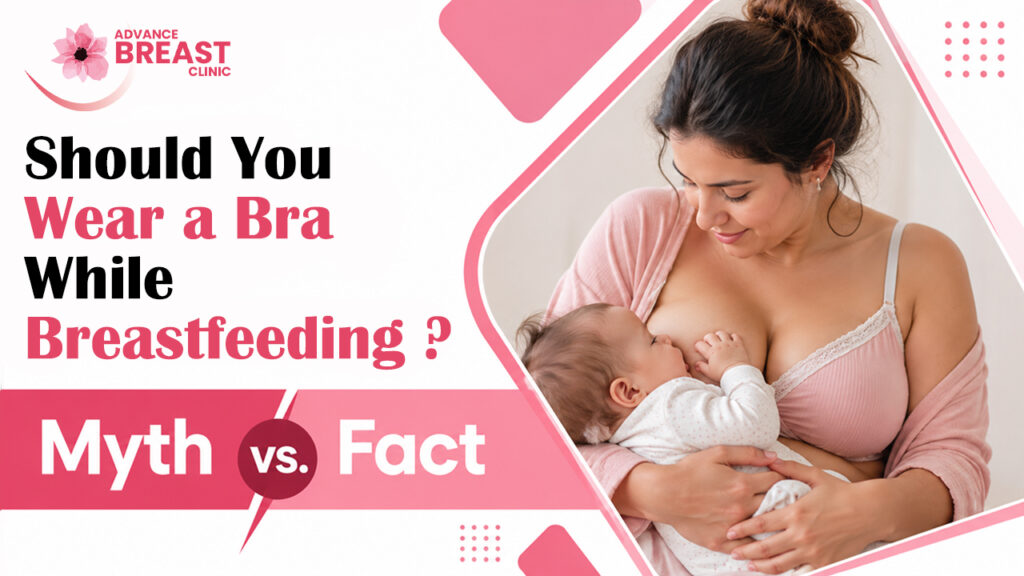
Should You Wear a Bra While Breastfeeding? Myth vs. Fact
You do not need to avoid wearing a bra while breastfeeding. A comfortable, properly fitted nursing or supportive bra is generally safe and may reduce breast movement, heaviness, and neck or back discomfort. The important issue is not whether you wear a bra, but whether the bra puts excessive pressure on your breasts.
A bra that feels tight, leaves deep marks, presses into breast tissue, or becomes uncomfortable when your breasts fill with milk should be loosened, resized, or replaced. Guidance from the Academy of Breastfeeding Medicine recommends an appropriately fitting supportive bra, while NHS breastfeeding guidance advises avoiding tight bras or clothing that restrict the breasts.
This article explains the difference between support and compression, how to select a nursing bra, whether underwire bras are appropriate, and which breast symptoms should be evaluated by a healthcare professional.
Is It Safe to Wear a Bra While Breastfeeding?
Yes. Wearing a bra while breastfeeding is generally safe when the bra fits comfortably and does not press firmly into the breast or underarm area. Some mothers prefer a bra for support and leak protection, while others feel more comfortable without one. Neither choice is automatically healthier.
During lactation, breast size and fullness can change throughout the day. A bra that fits comfortably after feeding may feel restrictive when the breasts are full. For this reason, flexibility, adjustable straps and enough room in the cup are often more important than choosing a particular brand or style.
The Academy of Breastfeeding Medicine notes that lactating breasts may benefit from appropriate support, particularly to reduce dependent swelling and progressive neck or back discomfort. At the same time, NHS guidance recommends avoiding tight bras because concentrated pressure can aggravate breast discomfort and may interfere with milk moving freely through part of the breast.
Wearing a Bra While Breastfeeding: Myth vs. Fact
Many breastfeeding myths combine separate questions about milk production, breast infection, cancer and breast shape. The following comparison helps clarify what is known.
| Common belief | Evidence-based explanation |
|---|---|
| “Breastfeeding mothers should never wear bras.” | False. A properly fitted supportive bra is generally safe. |
| “Any bra will reduce milk supply.” | There is no good evidence that a comfortable, correctly fitted bra reduces milk production. |
| “A very tight bra is harmless.” | False. Sustained pressure can worsen pain and may contribute to localized milk-flow problems. |
| “All underwire bras are forbidden.” | Not necessarily, but the wire must not press into changing breast tissue. Many mothers prefer non-wired bras. |
| “Sleeping in a bra is necessary.” | False. Nighttime bra use is optional and should be based on comfort. |
| “Wearing a bra prevents breasts from sagging.” | Unsupported. A bra may improve temporary support but cannot guarantee prevention of breast ptosis. |
| “Breastfeeding itself always causes sagging.” | Evidence suggests pregnancy and other physical factors have a stronger influence than breastfeeding alone. |
| “Bras cause breast cancer.” | No credible evidence shows that bra use causes breast cancer. |
The practical message is simple: support can be helpful; compression is not. Bra use should be guided by comfort, fit, breast fullness, skin condition and individual symptoms rather than a rule that every breastfeeding mother must either wear or avoid one.
Myth: A bra stops the breasts from producing milk
Milk production is mainly regulated by hormonal signals and how milk is removed from the breast. A correctly fitted bra is not expected to stop this process.
However, pressure concentrated on one area of the breast may become uncomfortable and may contribute to poor drainage from that area. This is why a bra should accommodate changes in breast fullness rather than tightly flattening or compressing the breast.
Myth: Going without a bra is always better for milk flow
Removing a bra may relieve pressure when the current bra is too tight, but going braless is not medically required. Mothers with larger or heavier breasts may find that gentle support makes feeding, walking, sleeping or daily activities more comfortable.
The better decision is to assess how the breast feels. Support should reduce pulling and movement without creating pressure points.
Myth: A nursing bra prevents mastitis
A nursing bra does not prevent every episode of mastitis. Mastitis involves inflammation within the breast and can be associated with several factors, including milk oversupply, feeding difficulties and tissue pressure.
A tight bra may worsen discomfort or create localized pressure, but bra fit is only one part of breastfeeding assessment. Breast pain, redness or fever should not be managed simply by changing bras when other symptoms suggest inflammation or infection.
What Is the Difference Between a Supportive Bra and a Tight Bra?
A supportive bra holds the breasts comfortably without digging, flattening or creating focused pressure. A tight bra compresses breast tissue, leaves persistent marks or becomes painful as the breasts fill.
| Supportive fit | Restrictive fit |
|---|---|
| Breast sits fully inside the cup | Breast bulges over or under the cup |
| Band feels secure but comfortable | Band digs into the ribs or under-breast area |
| Straps stay in place without deep marks | Straps cause grooves or shoulder pain |
| Fabric allows changes in breast fullness | Cups flatten or squeeze a full breast |
| No hard pressure near the underarm | Wire or seam presses into breast tissue |
| Feeding access is easy | Opening the bra pulls or pinches the breast |
| Bra remains comfortable between feeds | Bra becomes painful as milk accumulates |
A well-fitting bra should contain the whole breast, remain level around the body and avoid bulging or digging. These general fitting principles are especially important during breastfeeding because breast volume may change between feeds.
Signs that your bra may be too tight
Consider adjusting or replacing the bra when you notice:
- Deep or lasting marks around the breast, band or shoulder
- Breast tissue bulging at the top, side or bottom of the cup
- A wire or seam pressing into the breast or armpit
- Increased pain as the breasts become full
- A tender area repeatedly developing beneath the band or seam
- Chafing, moisture-related irritation or broken skin
- Difficulty lowering or opening the cup for feeding
- A feeling that the breasts are being flattened rather than supported
A bra should not need to be endured. Even when the labelled size appears correct, changes after delivery may mean that a different band, cup or style is needed.
How Should You Choose a Bra While Breastfeeding?
The best breastfeeding bra is not necessarily the most expensive one. It is the bra that accommodates breast changes, provides the level of support you need and remains comfortable during feeding.
1. Allow room for changing breast fullness
Breasts may feel fuller before a feed and softer afterward. Select cups made with enough flexibility to accommodate both states without compressing the breast.
Shopping immediately after feeding may underestimate how much room is needed when the breasts are full. Check the fit at different times of day before deciding that it is suitable.
2. Check the band
The band should remain level around the body and provide most of the bra’s support. It should feel secure, but you should be able to breathe, sit and move without discomfort.
A band that rides upward may be too loose. A band that digs into the under-breast area or leaves painful marks may be too tight.
3. Check the cup
The cup should contain the entire breast. There should be no cutting across breast tissue, folding of the breast or bulging around the edges.
A cup that gaps immediately after a feed but fits when the breast is full may still be acceptable if it remains supportive. The goal is comfort across normal fluctuations, not a perfectly sculpted appearance at every moment.
4. Look for easy feeding access
A nursing bra should open and close without excessive pulling or twisting. The lowered cup should not create a tight band across the lower or side portion of the breast while the baby feeds.
Before purchasing, test whether you can operate the clips or panels with one hand.
5. Choose breathable, washable fabric
Milk leakage, perspiration and prolonged skin contact may increase dampness beneath the breast. Breathable fabric and regular washing can reduce irritation.
Change wet breast pads and bras rather than leaving moisture against the skin for long periods.
6. Recheck the fit regularly
One bra size may not fit throughout pregnancy, early postpartum months and later breastfeeding. Reassess the fit when your usual bra suddenly becomes uncomfortable, your milk supply changes, or your baby begins feeding less frequently.
Mothers experiencing persistent discomfort may also benefit from a breastfeeding counselling session, where feeding position, latch, breast symptoms and practical concerns can be discussed. Advance Breast Clinic identifies breastfeeding counselling as part of its supportive-care services.
Can You Wear an Underwire Bra While Breastfeeding?
An underwire bra is not automatically unsafe, but it should not press into the breast, underarm or changing milk-filled tissue. Because breast size fluctuates during lactation, an underwire that fits at one time may dig in when the breast becomes fuller.
Many mothers prefer wireless nursing bras because they are more flexible and reduce the chance of concentrated pressure. A wired bra may still be comfortable for some women when:
- The wire follows the natural crease beneath the breast
- No part of the wire rests on breast tissue
- The cup contains the full breast
- The bra remains comfortable before and after feeding
- It does not leave painful or persistent marks
Stop wearing that bra and reassess the fit when the wire begins to press, pinch or create a repeated tender spot. The important consideration is pressure and fit, not the presence of wire alone.
Should You Wear a Bra While Sleeping and Breastfeeding?
Wearing a bra at night while breastfeeding is optional. Some mothers prefer a soft sleep or nursing bra for breast-pad placement, leakage control or support. Others sleep more comfortably without one.
A nighttime bra should be soft, breathable, non-restrictive and free from hard pressure points. Avoid sleeping in a structured bra that becomes tighter when your breasts fill overnight.
Advance Breast Clinic’s existing guidance similarly explains that sleep-bra use is a personal comfort choice and that a soft, properly fitted style may help some women with breastfeeding discomfort or breast heaviness.
Does Wearing a Bra While Breastfeeding Prevent Sagging?
A bra may support the breasts while it is being worn, but it cannot guarantee that the breasts will not change shape after pregnancy or breastfeeding.
Breast shape can be influenced by:
- Age
- Genetics
- Pregnancy-related breast enlargement
- Breast size and tissue weight
- Skin elasticity
- Weight gain or weight loss
- Smoking
- Number of pregnancies
- Natural changes after milk production decreases
A clinical study examining breast appearance after pregnancy concluded that the risk of breast ptosis increased with pregnancy but that breastfeeding did not appear to worsen those effects independently. This does not mean every woman will experience the same changes, but it challenges the claim that breastfeeding itself is always responsible for sagging.
Wearing a supportive bra may reduce movement-related discomfort and improve how the breasts feel during activity. It should not be presented as a proven method of permanently preventing breast sagging.
Similarly, choosing not to breastfeed solely because of fear of sagging is not supported by the available evidence. Questions about breast shape, asymmetry or persistent changes can be discussed during an assessment of common female breast concerns.
Can a Tight Bra Cause Blocked Milk Ducts or Mastitis?
A tight bra can create pressure on breast tissue and may contribute to localized discomfort or impaired milk movement, but mastitis is more complex than a single clothing choice.
NHS guidance recommends avoiding tight bras or clothing when dealing with tender lumps, blocked milk ducts or mastitis symptoms. It also recommends a well-fitting breastfeeding bra that does not restrict the breasts.
Changing the bra may help relieve an obvious pressure point, but persistent symptoms require a broader assessment. Feeding position, attachment, milk production patterns, breast inflammation and infection may all need to be considered.
Avoid assuming that every tender lump is caused by the bra. Advance Breast Clinic’s guide to common breastfeeding complications discusses concerns such as engorgement, nipple pain, mastitis, painful lumps and breast abscesses.
Experiencing repeated breast pain, a tender lump or feeding-related discomfort? Explore Advance Breast Clinic’s supportive breast-care services or request an individual assessment rather than relying only on changes in clothing.
When Should a Breastfeeding Mother See a Doctor?
Breast fullness and mild tenderness can occur during breastfeeding, but persistent, worsening or unusual symptoms should be assessed. Seek professional advice when you experience:
- A breast that becomes hot, swollen or increasingly painful
- Redness or a discoloured area that is spreading
- Fever, chills, body aches or flu-like illness
- A painful lump that does not improve
- Recurrent symptoms in the same area
- Pus or unusual fluid from the nipple
- Spontaneous bloody nipple discharge
- Broken or infected-looking nipple skin
- A breast abscess or soft fluid-filled swelling
- Persistent pain unrelated to normal fullness
- A new lump that remains after feeding
- Skin dimpling, new nipple inversion or another unexplained structural change
Mastitis may cause warmth, tenderness, swelling, fever and a general feeling of illness. Symptoms that are worsening or making you feel systemically unwell require timely medical assessment.
A new lump during breastfeeding is often related to lactation, but it should not automatically be assumed to be a blocked duct. Persistent or unusual breast changes can be evaluated through a clinical breast assessment. Imaging such as ultrasound may be considered when clinically appropriate.
When urgent assessment is appropriate
Arrange prompt or same-day medical advice when:
- You have fever with a hot, painful or swollen breast
- Symptoms worsen quickly
- You feel significantly unwell
- Redness continues to spread
- A painful swelling may contain fluid or pus
- Symptoms fail to improve despite appropriate early care
Do not delay evaluation because you are worried that treatment will automatically require stopping breastfeeding. The appropriate plan depends on the diagnosis and individual circumstances.
Where Can You Seek Breastfeeding and Breast-Health Support?
Advance Breast Clinic provides breastfeeding counselling, supportive care and clinical evaluation for breast-related concerns. The clinic is located in Jawalakhel, Lalitpur, and serves patients from the Kathmandu Valley and other parts of Nepal.
A breastfeeding counsellor may help with positioning, latch, confidence, milk-supply concerns and common feeding difficulties. A breast specialist may be more appropriate when the main concern is a persistent lump, marked swelling, redness, recurring inflammation, unusual nipple discharge or another structural breast change.
Patients can review the clinic’s breastfeeding counselling service or contact Advance Breast Clinic for an appointment.
Key Takeaways
- You do not need to avoid wearing a bra while breastfeeding.
- A comfortable and properly fitted supportive bra is generally safe.
- The bra should support the breasts without flattening or compressing them.
- Tight bands, small cups, hard seams and poorly positioned wires may create painful pressure.
- A properly fitted bra is not known to reduce milk production.
- Sleeping in a bra is optional and should be based on comfort.
- A bra may improve temporary support but cannot guarantee prevention of sagging.
- Available evidence suggests that pregnancy and other factors influence breast-shape changes more strongly than breastfeeding alone.
- Persistent lumps, fever, redness, marked swelling or worsening pain require professional evaluation.
- Breastfeeding concerns and breast disease concerns sometimes overlap; the correct type of support depends on the symptoms.
FAQs
Is it necessary to wear a bra while breastfeeding?
No. Wearing a bra while breastfeeding is optional. Some mothers prefer the support and the ability to hold breast pads, while others feel more comfortable without one. A bra is generally safe when it fits correctly and does not flatten, pinch or create painful pressure on the breast.
Can wearing a bra reduce breast-milk supply?
A properly fitted bra is not known to reduce milk production. However, an overly tight bra may place pressure on breast tissue and contribute to localized discomfort or poor drainage. Choose a bra that allows normal changes in fullness before and after feeding.
Can a tight bra cause mastitis?
A tight bra may contribute to localized breast pressure, but mastitis has multiple possible contributing factors. It should not be blamed on a bra without assessing feeding patterns, inflammation, milk production and other symptoms. Fever, redness, swelling or worsening pain should be medically evaluated.
Is an underwire bra safe while breastfeeding?
It may be safe when the wire lies beneath the breast and does not press into breast tissue. Because breast size changes during lactation, many mothers find wireless bras more comfortable. Stop using an underwire style when it causes pressure, pain or repeated tender areas.
Should I wear a bra to bed while breastfeeding?
Nighttime bra use is a personal comfort choice. A soft, breathable nursing bra may help manage leaking or breast heaviness. Avoid a tight, wired or highly structured bra that presses into the breasts as they become fuller overnight.
Does going braless improve milk flow?
Not necessarily. Going braless may relieve pressure when a bra is too tight, but it is not required for healthy milk flow. A comfortable supportive bra should not interfere with breastfeeding. The fit matters more than whether a bra is worn.
Does breastfeeding cause breasts to sag?
Breast shape may change after pregnancy, but breastfeeding does not appear to be the only or primary cause. Pregnancy, age, genetics, breast size, skin elasticity, smoking and weight changes may all contribute. A published clinical study found that pregnancy increased ptosis risk while breastfeeding did not independently worsen it.
What kind of bra is best for breastfeeding?
Choose a bra with flexible cups, adjustable straps, an appropriately secure band, easy nursing access and breathable fabric. The entire breast should fit inside the cup without bulging, pinching or concentrated pressure from seams or wires.
When should breastfeeding breast pain be checked?
Seek medical advice when pain is persistent, worsening or accompanied by a hot swollen area, redness, fever, flu-like symptoms, an unresolved lump, unusual discharge or skin changes. A breast lump that remains after feeding should not automatically be assumed to be a blocked duct.
Can wearing a bra while breastfeeding cause breast cancer?
No credible evidence shows that wearing a bra causes breast cancer. Bra type, underwire use and sleeping in a bra are not established breast-cancer risk factors. A poor fit can cause discomfort or irritation, but that is different from causing cancer.