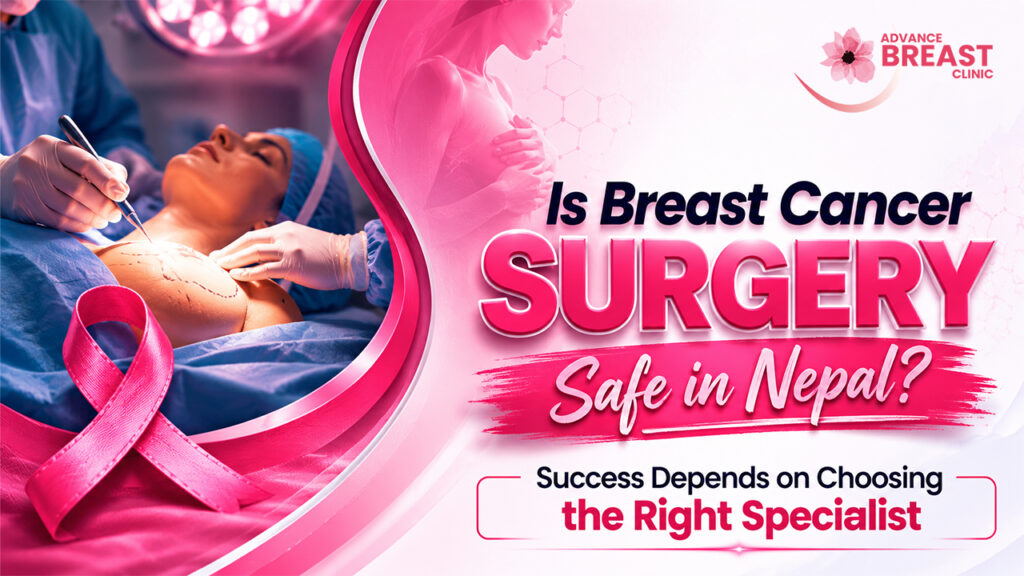
Is Breast Cancer Surgery Safe in Nepal ?
Breast cancer surgery can be safe in Nepal when it is performed by a trained breast cancer specialist in a proper surgical setup with accurate diagnosis, anesthesia support, pathology, imaging, and follow-up care. The success of breast cancer surgery in Nepal depends less on the country and more on early diagnosis, cancer stage, surgical planning, the doctor’s expertise, and access to complete breast cancer treatment.
Today, Nepal has trained breast onco-surgeons, diagnostic facilities, breast-conserving surgery, mastectomy, and reconstructive options. For many patients, going abroad is not always necessary if the required level of care is available locally.
Is Breast Cancer Surgery Safe in Nepal?
Yes, breast cancer surgery can be safe in Nepal when done by an experienced breast cancer specialist in a reliable breast clinic or hospital setting.
A safe treatment plan usually includes:
| Safety Factor | Why It Matters |
| Accurate diagnosis | Confirms cancer type, stage, and treatment direction |
| Trained breast surgeon | Helps choose between lumpectomy, mastectomy, and reconstruction |
| Proper anesthesia setup | Reduces surgical and medical risk |
| Pathology support | Confirms whether cancer has been removed with clear margins |
| Oncology coordination | Helps plan chemotherapy, radiation, hormone therapy, or targeted therapy |
| Follow-up care | Detects complications early and guides long-term recovery |
The National Cancer Institute explains that most people with breast cancer or DCIS have surgery to remove the tumor and nearby breast tissue, and the two main surgical options are lumpectomy and mastectomy, with or without reconstruction.
Why Choosing the Right Specialist Matters
Breast cancer is not only a lump-removal problem. It is a disease that needs correct diagnosis, staging, surgery, pathology review, and often additional treatment.
A general surgeon may be able to remove a lump, but a dedicated breast onco-surgeon focuses on cancer safety, breast shape, lymph node management, margin clearance, and future treatment needs.
At Advance Breast Clinic, breast clinic in Kathmandu, Dr. Banira Karki is listed as Nepal’s first female breast onco-surgeon, with fellowship training in Breast Oncosurgery from Tata Medical Center, India, and training in Breast Oncoplastic Surgery from Germany. The clinic states that her special interests include breast-conserving surgery and reconstructive surgery.
This matters because the goal of breast cancer surgery is not only to remove cancer. The goal is to remove it safely, preserve quality of life where possible, and prepare the patient for the next stage of treatment.
What Is Breast Cancer Surgery?
Breast cancer surgery is an operation to remove cancerous tissue from the breast. Depending on the cancer size, location, stage, breast size, and patient preference, the surgeon may recommend breast-conserving surgery or mastectomy.
The two common types are:
1. Breast-Conserving Surgery
This is also called lumpectomy, wide local excision, partial mastectomy, or breast preservation surgery.
It removes the cancer and a rim of surrounding normal tissue while keeping most of the breast. The American Cancer Society notes that breast-conserving surgery removes the cancer while leaving as much normal breast as possible, and many women need radiation therapy afterward.
2. Mastectomy
Mastectomy removes the whole breast tissue. It may be recommended when the tumor is large, cancer is present in multiple areas, radiation is not suitable, or the patient chooses it after proper counseling.
Some patients may also consider breast reconstruction, either at the same time or later.
Breast-Conserving Surgery vs Mastectomy
| Feature | Breast-Conserving Surgery | Mastectomy |
| Breast tissue removed | Cancer area plus margin | Whole breast tissue |
| Breast shape | Usually more preserved | Breast removed; reconstruction may be possible |
| Radiation | Often needed | May or may not be needed |
| Hospital stay | Often shorter | May require longer observation |
| Best for | Many early-stage cancers | Larger, multiple, or selected high-risk cases |
| Survival | Similar to mastectomy in many early-stage cases when combined with radiation | Effective when medically indicated |
Choosing breast conserving surgery plus radiation instead of mastectomy does not affect a woman’s chances of long-term survival in many suitable early-stage cases.
This is why specialist evaluation is important. The “bigger” surgery is not always the “better” surgery. The right operation depends on the biology and stage of the cancer.
Is Breast Cancer Treatment Available in Nepal?
Yes. Breast cancer treatment in Nepal can include diagnosis, imaging, biopsy, surgery, chemotherapy, radiation therapy, hormone therapy, targeted therapy, and supportive care, depending on the hospital and care team.
Advance Breast Clinic located in Kathmandu, Nepal is a one stop center for breast related queries and problems, offering breast exams, mammograms, breast ultrasound, biopsy, and breast cancer surgery. It also mentions consultation for mastectomy, lumpectomy, and breast reconstruction.
However, not every center offers the same level of care. Patients should ask whether the clinic or hospital has access to:
- Breast imaging
- Core needle biopsy
- Histopathology and receptor testing
- Surgical oncology support
- Medical oncology
- Radiation oncology
- Reconstruction options
- Lymphedema care
- Follow-up and survivorship support
A good breast clinic should guide the patient through the full journey, not just the operation.
Why Early Diagnosis Improves Safety and Outcomes
Breast cancer treatment is usually more successful when cancer is detected early. The World Health Organization explains that breast cancer begins in the milk ducts or lobules and can spread into nearby tissue if left unchecked.
Early-stage cancer may allow more treatment choices, including breast-conserving surgery. Advanced cancer may need chemotherapy before surgery, more extensive surgery, radiation, or systemic therapy.
The American Cancer Society reports 5-year relative survival rates of more than 99% for localized breast cancer, 87% for regional disease, and 33% for distant disease, based on U.S. SEER data from women diagnosed between 2015 and 2021.
These statistics do not predict one person’s exact outcome, but they show why early evaluation is important.
Signs You Should Visit a Breast Clinic
Visit a breast clinic if you notice:
- A new breast lump
- Change in breast size or shape
- Nipple discharge, especially bloody discharge
- Nipple pulling inward
- Skin dimpling or thickening
- Persistent breast pain in one area
- Lump in the armpit
- Redness or swelling that does not settle
- Any change that feels unusual for you
Not every lump is cancer. But every suspicious change should be assessed by a qualified doctor.
Advance Breast Clinic states that both women and men can visit the clinic, because men can also develop breast cancer and other breast conditions.
What Happens Before Breast Cancer Surgery?
Before surgery, your specialist will usually review:
1. Clinical Examination
The doctor examines the breast, nipple, skin, and armpit lymph nodes.
2. Imaging
This may include ultrasound, mammogram, or MRI depending on age, breast density, and the suspected condition.
3. Biopsy
A biopsy confirms whether the lump is cancer. Surgery should not usually be planned on suspicion alone.
4. Cancer Biology Testing
Tests such as ER, PR, HER2, and Ki-67 help determine whether hormone therapy, targeted therapy, or chemotherapy may be needed.
5. Staging
Staging checks whether the disease is limited to the breast or has spread.
6. Multidisciplinary Planning
The surgeon may coordinate with medical oncologists, radiation oncologists, pathologists, radiologists, and plastic surgeons.
This planning helps decide whether surgery should happen first or whether chemotherapy should be given before surgery.
When Is Surgery Done First?
Surgery may be done first when the cancer is early-stage, operable, and does not require treatment to shrink the tumor before removal.
Common examples include:
- Small breast tumors
- Some early-stage hormone receptor-positive cancers
- DCIS
- Cancer without major lymph node involvement
- Cases suitable for breast-conserving surgery
The final decision depends on imaging, biopsy, receptor status, patient health, and patient preference.
When Is Chemotherapy Done Before Surgery?
Chemotherapy before surgery is called neoadjuvant chemotherapy. It may be recommended when:
- The tumor is large
- Cancer has spread to lymph nodes
- The cancer is HER2-positive
- The cancer is triple-negative
- The surgeon wants to shrink the tumor to allow breast conservation
- Immediate surgery may not give the best long-term plan
This is another reason to choose a breast cancer specialist who works closely with oncology colleagues.
How Risky Is Breast Cancer Surgery?
Breast cancer surgery is generally considered safe when done in an appropriate medical setting, but no surgery is risk-free.
Possible risks include:
| Possible Risk | What It Means |
| Bleeding | Uncommon but possible after surgery |
| Infection | May need antibiotics or wound care |
| Pain or tightness | Usually improves with recovery |
| Fluid collection | Seroma may develop and need drainage |
| Arm swelling | Lymphedema risk increases when lymph nodes are removed |
| Numbness | Can occur around the chest or armpit |
| Shoulder stiffness | Physiotherapy may be needed |
| Cosmetic change | Breast shape may change after surgery |
| Need for another surgery | May happen if margins are not clear |
A trained specialist reduces risk through careful planning, proper surgical technique, and follow-up care.
How Long Does Breast Cancer Surgery Take?
The time depends on the type of operation.
| Type of Surgery | Typical Duration |
| Lumpectomy / breast-conserving surgery | Around 1–2 hours |
| Mastectomy without reconstruction | Around 1–3 hours |
| Mastectomy with lymph node surgery or reconstruction | Around 3–4+ hours |
| Complex reconstruction | May take longer |
A simple lumpectomy with or without sentinel node biopsy can usually be done in one to two hours, while mastectomy with axillary lymph node dissection or reconstruction may take up to three to four hours.
Do People Survive Breast Cancer Surgery?
Yes. Many people survive breast cancer surgery, especially when cancer is detected early and treated properly.
It is important to understand that surgery is one part of breast cancer treatment. Survival depends on stage, tumor biology, lymph node status, response to treatment, and access to follow-up therapy.
The American Cancer Society’s 5-year survival data shows that outcomes are much better when cancer is localized than when it has spread to distant organs.
So the key message is not only “get surgery.” The key message is “get the right treatment at the right time.”
Can Breast Cancer Be 100% Cured?
No doctor can honestly promise a 100% cure for every breast cancer patient.
Many early-stage breast cancers are highly treatable, and some patients remain cancer-free for life after treatment. But recurrence risk depends on cancer stage, grade, receptor status, genetics, treatment response, and follow-up.
A responsible specialist will discuss realistic outcomes, not guarantees.
Avoid any clinic or advertisement that promises a guaranteed cure. In cancer care, honest counseling is part of safe treatment.
How Much Does Breast Cancer Treatment Cost in Nepal?
The cost of breast cancer treatment in Nepal varies widely. It depends on the hospital, cancer stage, surgery type, need for chemotherapy, radiation, targeted therapy, reconstruction, investigations, and length of treatment.
A Nepal Health Research Council library record on breast cancer treatment cost reported a mean total treatment cost of about NPR 465,697 and a median of about NPR 371,669 in a specialized hospital study, with a wide range from NPR 111,951 to NPR 1,837,122. The same record noted that chemotherapy contributed the highest average cost, followed by radiotherapy and surgery.
Another Nepal focused financial burden study noted that a publicly financed deprived citizen treatment fund provides a treatment subsidy of NPR 100,000 for chronic diseases including cancer, while another scheme provides a monthly cash allowance of NPR 5,000.
Cost Factors to Ask About
| Cost Area | Questions to Ask |
| Consultation | What is included in the first visit? |
| Imaging | Do I need an ultrasound, mammogram, or MRI? |
| Biopsy | What type of biopsy is needed? |
| Surgery | Lumpectomy, mastectomy, lymph node surgery, or reconstruction? |
| Hospital stay | Same-day discharge or admission? |
| Pathology | Are margin and receptor reports included? |
| Chemotherapy | How many cycles and which medicines? |
| Radiation | Is radiation needed after surgery? |
| Follow-up | How often are visits needed? |
Patients should request a written estimate because cancer treatment cost can change after biopsy, staging, and treatment planning.
Is Going Abroad Necessary for Breast Cancer Surgery?
Not always.
Many patients can receive safe and appropriate breast cancer surgery in Nepal, especially when treated by trained specialists with access to proper diagnostics, surgery, pathology, oncology, and follow-up care.
Going abroad may be considered when:
- A required treatment is not available locally
- A complex reconstruction is needed and unavailable
- The patient wants a second opinion
- Advanced technology or clinical trials are needed
- The case is rare or unusually complicated
But for many standard breast cancer cases, Nepal now has trained doctors and breast care centers that can provide evidence-based care.
The best country for breast cancer treatment is not automatically the most expensive country. The best place is where the patient can receive timely, complete, coordinated, and specialist-led treatment.
How to Choose the Right Breast Cancer Specialist in Nepal
Before choosing a doctor or breast clinic, ask these questions:
1. Are you trained in breast cancer surgery?
Look for specific breast oncosurgery training, not just general surgical experience.
2. Do you perform breast-conserving surgery?
A specialist should be able to explain whether lumpectomy is safe in your case.
3. Do you offer or coordinate reconstruction?
Not every patient needs reconstruction, but the option should be discussed when relevant.
4. Will my case be coordinated with oncology?
Breast cancer care often needs more than surgery.
5. How will my lymph nodes be assessed?
Sentinel lymph node biopsy or axillary surgery may be part of treatment.
6. What happens after surgery?
Ask about pathology reports, margin status, drain care, physiotherapy, radiation, chemotherapy, and follow-up.
7. Can I get a clear treatment estimate?
A good clinic should explain likely cost stages and possible changes.
Why Advance Breast Clinic May Be Relevant for Patients in Nepal
Advance Breast Clinic states that it provides consultation, clinical examination, diagnostic facilities, supportive care, and breast cancer surgery-related services. It is located in Jawalakhel, Lalitpur, and lists services such as breast exams, mammograms, breast ultrasound, biopsy, and breast cancer surgery.
The clinic also notes that Dr. Banira Karki, breast cancer specialist based in Kathmandu Nepal has more than 10 years of surgical experience and a special interest in breast conserving surgery, oncoplastic surgery, and breast reconstruction.
For patients searching for a dedicated breast clinic in Nepal, a specialist-led clinic may help reduce confusion by guiding the patient from symptoms to diagnosis and treatment planning.
What Should Patients Expect After Surgery?
Recovery depends on the operation.
After lumpectomy, many patients recover faster. After mastectomy or reconstruction, recovery may take longer.
Common recovery needs include:
- Wound care
- Pain control
- Drain care, if used
- Arm movement exercises
- Follow-up for pathology results
- Planning for radiation or chemotherapy
- Emotional support
- Lymphedema prevention advice
The American College of Surgeons notes that many women can go home the same day after lumpectomy, while mastectomy may involve same-day discharge or a 1–2 night stay depending on surgery type; reconstruction may require a longer stay.
Practical Advice for Patients in Nepal
If you or a family member is newly diagnosed, do not rush into surgery without full evaluation.
Take these steps:
- Confirm diagnosis with biopsy.
- Ask for receptor status: ER, PR, HER2.
- Ask whether imaging has assessed tumor size and lymph nodes.
- Discuss breast conservation vs mastectomy.
- Ask whether chemotherapy is needed before or after surgery.
- Ask whether radiation will be needed.
- Request a written treatment plan.
- Keep copies of all reports.
- Discuss cost and financial support early.
- Bring a trusted family member to consultations.
A calm, structured approach helps patients make better decisions.
FAQ: Breast Cancer Surgery in Nepal
How risky is breast cancer surgery?
Breast cancer surgery is generally safe in a proper hospital setting, but risks include bleeding, infection, fluid collection, pain, numbness, arm swelling, and need for further surgery. Risk depends on the patient’s health, cancer stage, and operation type.
Which country is the best for breast cancer treatment?
There is no single best country for every patient. The best treatment is timely, specialist-led, evidence-based, and complete. Many patients can receive safe breast cancer treatment in Nepal when the required expertise and facilities are available.
Can breast cancer be 100% cured?
No doctor can guarantee 100% cure for every patient. Many early-stage breast cancers are highly treatable, but outcome depends on stage, tumor biology, treatment response, and follow-up.
How much does it cost to treat breast cancer in Nepal?
Cost varies widely. A Nepal-based specialized hospital study reported median total treatment cost around NPR 371,669, with a wide range depending on surgery, chemotherapy, radiation, and medicines. Patients should request a personalized estimate.
Do people survive breast cancer surgery?
Yes. Many people survive breast cancer surgery, especially when cancer is detected early and treated properly. Survival depends on stage, cancer type, lymph node status, and complete treatment.
How many hours is breast removal surgery?
Mastectomy without reconstruction usually takes about 1 to 3 hours. Surgery can take longer if lymph node surgery or breast reconstruction is done at the same time.
Conclusion
Breast cancer surgery can be safe in Nepal when the patient receives care from the right specialist in the right setting. Success depends on early diagnosis, accurate biopsy, proper staging, careful surgical planning, oncology coordination, and structured follow-up.
Nepal now has trained breast specialists who can offer breast-conserving surgery, mastectomy, and reconstructive options. For many patients, world-standard thinking in breast cancer treatment is available locally.
The most important decision is not whether to choose Nepal or abroad. The most important decision is choosing a qualified breast cancer specialist and starting evidence-based treatment without unnecessary delay.
Reviewed by Advance Breast Clinic Medical Team
Advance Breast Clinic is a dedicated breast clinic in Nepal offering consultation, clinical examination, diagnostic support, breast cancer surgery guidance, and supportive care. The clinic is led by Dr. Banira Karki, listed by the clinic as Nepal’s first female breast onco-surgeon, with training in breast oncosurgery and breast oncoplastic surgery.