Does Wearing a Bra Cause Breast Cancer? Here’s What the Science Actually Says
Many women worry that wearing a bra, especially an underwire bra might increase their risk of breast cancer. It’s one of the most common questions our breast specialists hear at Advance Breast Clinic. The short answer? No, wearing a bra does not cause breast cancer. But there’s more nuance to this topic than a one line answer.
In this blog, we’ll walk you through what peer reviewed research says, where this myth came from, what actually increases your risk of breast cancer, and the five warning signs every woman should know. Whether you’re concerned about your breast health or simply curious, this article gives you evidence based, doctor reviewed information you can trust.
Where Did the Bra-Breast Cancer Myth Come From?
The idea that bras might cause breast cancer became widely circulated after the 1995 book Dressed to Kill by Sydney Ross Singer and Soma Grismaijer. The authors claimed that bras restricted lymphatic drainage, causing toxins to accumulate in breast tissue and ultimately leading to cancer.
This theory was not peer reviewed, not based on clinical research, and has since been thoroughly examined and dismissed by the scientific community.
A large scale 2014 study published in Cancer Epidemiology, Biomarkers & Prevention by researchers at the Fred Hutchinson Cancer Research Center studied over 1,500 women and found no association between bra wearing habits and breast cancer risk not bra type, not cup size, not the number of hours worn per day, and not whether the bra had underwire.
The American Cancer Society, the Susan G. Komen Foundation, and Cancer Research UK all agree: there is no credible scientific evidence that wearing a bra causes breast cancer.
So, Does Wearing a Bra Cause Breast Cancer? (The Evidence-Based Answer)
No. The lymphatic system in your breast tissue is not compressed or blocked by wearing a bra. Lymphatic vessels are flexible and not rigid enough to be permanently affected by clothing pressure. Toxins are filtered through multiple lymph nodes and pathways; a bra does not interfere with this process.
Here’s a quick summary of what major health organizations say:
| Organization | Position on Bra & Breast Cancer |
| American Cancer Society | No link found between bra use and breast cancer |
| Cancer Research UK | No scientific evidence supports this claim |
| National Cancer Institute (NCI) | Bra type and usage not listed as risk factors |
| Fred Hutchinson Cancer Research Center | 2014 study found zero association |
| Susan G. Komen Foundation | Classifies it as a myth |
If you’ve been anxious about this, you can breathe easy. The concern is understandable, but it is not supported by the evidence.
What Actually Causes Breast Cancer? Real Risk Factors to Know
While bras are not a risk factor, several well established factors do influence breast cancer risk. Knowing them helps you make informed decisions and have better conversations with your breast doctor.
Non-Modifiable Risk Factors (Things You Cannot Change)
Being female is the single biggest risk factor. While men can develop breast cancer, it is far more common in women. Age is also a significant factor; most breast cancers are diagnosed in women over 50.
Family history and genetics play an important role. Mutations in the BRCA1 and BRCA2 genes substantially increase risk. If a first-degree relative (mother, sister, or daughter) has had breast cancer, your risk is approximately doubled.
Dense breast tissue is another inherent factor. Women with denser breasts not only have a higher risk but also face more challenges in early detection via mammography.
Modifiable Risk Factors (Things You Can Influence)
These are areas where lifestyle choices genuinely matter:
Alcohol consumption: Even moderate drinking (one drink per day) modestly raises breast cancer risk. The risk increases proportionally with the amount consumed.
Being overweight or obese after menopause: Fat tissue produces estrogen. After menopause, excess body fat can elevate estrogen levels and increase cancer risk.
Physical inactivity: Regular physical activity has been shown to lower breast cancer risk, particularly in postmenopausal women.
Hormone replacement therapy (HRT): Long-term use of combined estrogen-progesterone HRT increases risk. Discuss the benefits and risks with your breast specialist.
Late first pregnancy or never having children: Women who have their first full-term pregnancy after age 30, or who have never been pregnant, have a slightly higher risk.
Not breastfeeding: Breastfeeding for a year or more has been shown to modestly reduce risk.
Smoking: While the evidence is less definitive than for lung cancer, smoking has been associated with increased breast cancer risk, particularly in women who started before their first full-term pregnancy.
Can Wearing a Bra Be Harmful in Other Ways?
Even though a bra does not cause breast cancer, there are legitimate, non-cancerous concerns that deserve attention.
Skin Irritation and Discomfort
An ill fitting bra can cause skin chafing, redness, and irritation, especially around the underwire and band area. This is a comfort and skin health issue, not a cancer risk.
Breast Pain (Mastalgia)
Some women experience breast tenderness or pain that worsens when wearing a poorly fitting or overly tight bra. This is common and usually not a sign of anything serious, but it’s worth mentioning to a breast doctor if the pain is persistent.
Posture and Musculoskeletal Issues
Women with larger busts who do not wear a properly supportive bra may experience neck, shoulder, and back pain. Conversely, bras that are too tight or too structured can restrict breathing or movement.
Sleeping in a Bra
Some women prefer to sleep in a bra for comfort; others find it uncomfortable. There is no clinical evidence that sleeping in a bra causes any harm, including cancer. It is a personal comfort preference.
The key takeaway: wearing a bra is generally safe, but fit and comfort matter for your day to day wellbeing.
5 Warning Signs of Breast Cancer Every Woman Should Know
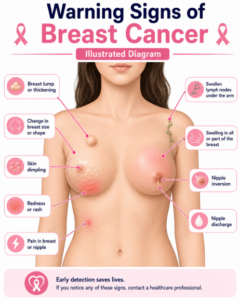
Early detection is one of the most powerful tools against breast cancer. Knowing the warning signs and acting promptly can make a significant difference in outcomes.
1. A New Lump or Thickening in the Breast or Underarm
Not all lumps are cancerous, in fact, most are benign. However, any new, unexplained lump or area of thickening should be evaluated by a breast specialist without delay.
2. Changes in Breast Size, Shape, or Appearance
Unexplained changes in the shape or contour of one breast particularly if asymmetrical can be a sign worth investigating. This includes swelling or shrinking that has no clear explanation.
3. Skin Changes on the Breast
Look out for dimpling, puckering, or skin that resembles the texture of an orange peel (peau d’orange). Redness, flakiness, or thickening of the skin around the nipple or areola also warrants attention.
4. Nipple Discharge (Especially Bloody or Spontaneous)
Clear or milky discharge from the nipple may sometimes be normal, but spontaneous discharge particularly if it is bloody, from one breast only, or from a single duct should be assessed promptly by a breast doctor.
5. Persistent Breast Pain
While most breast pain is hormonal or musculoskeletal and not related to cancer, pain that is persistent, localized, and does not resolve with your menstrual cycle should be discussed with a breast surgeon or specialist.
Important: These signs do not automatically mean cancer. Many conditions can cause these changes. But the only way to know for sure is a proper clinical evaluation. Do not delay seeking advice.
Breast Cancer Risk: A Comparison at a Glance
| Factor | Association with Breast Cancer Risk |
| Wearing a bra | No evidence of increased risk |
| Sleeping in a bra | No evidence of increased risk |
| Underwire bra | No evidence of increased risk |
| BRCA1/BRCA2 mutation | Significantly increases risk |
| Excessive alcohol use | Modestly increases risk |
| Obesity (post-menopause) | Increases risk |
| Physical inactivity | Increases risk |
| Family history (first-degree) | Approximately doubles risk |
| Dense breast tissue | Increases risk + harder to detect |
| Long-term combined HRT | Increases risk |
When Should You See a Breast Specialist?

You do not need a dramatic symptom to make an appointment at a breast clinic. Consider consulting a breast doctor if:
- You notice any of the five warning signs described above
- You have a strong family history of breast or ovarian cancer
- You feel a new or changing lump in your breast or armpit
- You are due for a routine mammogram screening
- You have unexplained or persistent breast pain
- You want a professional risk assessment based on your personal and family history
Early stage breast cancer is far more treatable. Routine screening and prompt evaluation of any changes are your best defenses.
At Advance Breast Clinic based in Kathmandu, our team of experienced breast surgeons and breast specialists provides comprehensive breast health assessments, diagnostic imaging, and personalized care in a supportive environment. You don’t need to wait for a “serious” symptom your concerns are valid and worth addressing.
Breast Health Tips: What You Can Actually Do

While you don’t need to change your bra habits to prevent breast cancer, there are evidence-based steps you can take to support your breast health:
Schedule regular breast screening: Discuss the right mammography schedule for your age and risk level with your breast doctor.
Perform monthly breast self-examinations: Familiarize yourself with how your breasts normally look and feel so you notice changes quickly.
Maintain a healthy weight: Especially after menopause, maintaining a healthy BMI reduces excess estrogen exposure.
Limit alcohol: Staying within recommended limits (or avoiding alcohol altogether) is one of the most straightforward steps you can take.
Stay physically active: Aim for at least 150 minutes of moderate-intensity activity per week.
Know your family history: If breast or ovarian cancer runs in your family, speak with a breast specialist about genetic counselling and more frequent screening.
Wear a well-fitting bra: Not for cancer prevention, but for your comfort, posture, and skin health.
Frequently Asked Questions
Is a bra harmful for health?
In general, no. A properly fitting bra is not harmful to your health. It does not cause breast cancer or damage breast tissue. A poorly fitting bra can cause discomfort, skin irritation, or musculoskeletal strain, but these are not health-threatening conditions. The key is wearing the right size and style for your body type and activity level.
Is it safe to wear a bra?
Yes, it is safe to wear a bra. Multiple large scale studies have confirmed no link between bra use and breast cancer. Wearing a bra whether underwire or wireless, push-up or sports bra does not increase your risk of any disease when it fits properly and does not cause prolonged pain or skin damage.
What are 5 warning signs of breast cancer?
The five key warning signs are: (1) a new lump or thickening in the breast or armpit, (2) changes in the size or shape of the breast, (3) skin changes such as dimpling, puckering, or redness, (4) unexplained nipple discharge, especially if bloody or spontaneous, and (5) persistent, localized breast pain that does not resolve. If you notice any of these, consult a breast specialist promptly.
Is wearing a bra 24/7 unhealthy?
There is no clinical evidence that wearing a bra continuously causes cancer or serious illness. However, wearing a tight bra for extended periods without breaks can cause skin irritation, restrict circulation to the skin surface, and contribute to discomfort. Giving your skin some breathing time particularly at night is reasonable for comfort and skin hygiene, though it is a personal choice, not a medical necessity.
What type of bra causes breast cancer?
No type of bra underwire, push-up, sports, padded, or strapless has been shown to cause breast cancer. This is a well-studied question and the research is consistent: bra type, cup size, band tightness, and duration of wear are not risk factors for breast cancer. The claim that underwire bras block lymphatic flow is not supported by anatomy or clinical evidence.
Key Takeaways
- Wearing a bra does not cause breast cancer this is a myth not supported by scientific evidence.
- The lymphatic system is not blocked or impaired by bras, regardless of type or fit.
- Real risk factors include genetics, age, obesity, alcohol use, physical inactivity, and hormonal factors.
- Five warning signs of breast cancer: lump, shape change, skin changes, nipple discharge, persistent pain.
- Routine screening and self-examination are your most effective tools for early detection.
- A well-fitting bra is safe and a personal comfort choice.
- If you have concerns about your breast health, consult a breast doctor or breast specialist.
This article was reviewed and approved by the specialist team at Advance Breast Clinic, Nepal’s dedicated breast health centre providing expert diagnosis, treatment, and counselling for all breast conditions. Our breast doctor in Kathmandu, Nepal bring decades of combined clinical experience to help patients navigate their breast health with confidence and clarity.
For appointments or consultations, visit advancebreastclinic.com.np
Last medically reviewed: 2025 | Evidence-based content | Sources: Fred Hutchinson Cancer Research Center (2014), American Cancer Society, Cancer Research UK, National Cancer Institute